Laughing Gas vs. Oral Sedation: Which Option Is Right for You?
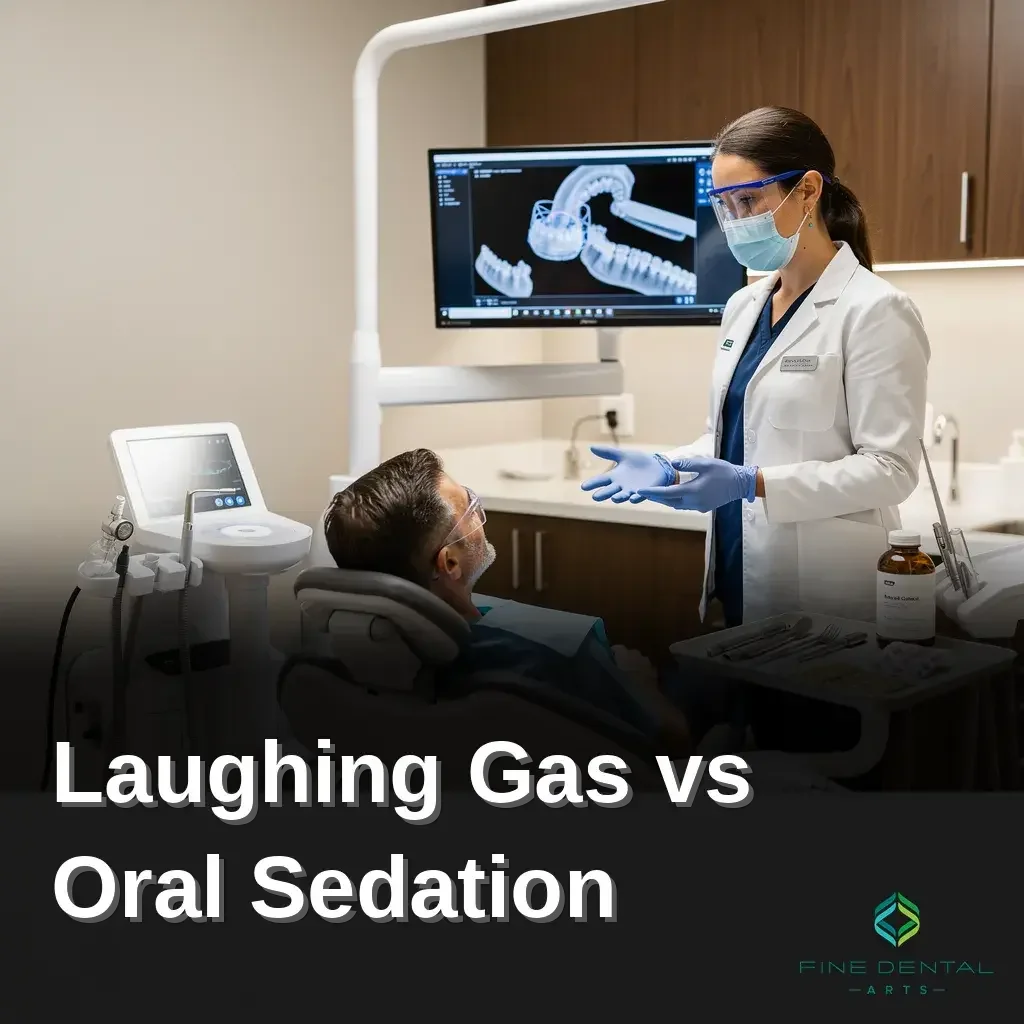
Nitrous oxide, or laughing gas, wears off within minutes and lets you drive yourself home after treatment. Oral sedation uses a prescribed pill for deeper relaxation during longer or more invasive procedures, requiring a driver afterward. Your comfort level and anxiety severity determine which sedation option fits your treatment length at Fine Dental Arts.
Why Does Dental Anxiety Keep You From Care?
Fear keeps a real share of the population out of the dentist's chair entirely. As many as 20% of Americans admit to avoiding dental visits because of fear, according to the sources referenced by Fine Dental Arts. That statistic represents millions of untreated cavities, worsening gum disease, and small problems that grow into painful, expensive emergencies. Skipping checkups doesn't make anxiety disappear; it only delays the inevitable while damage accumulates quietly beneath the surface.
What causes dental anxiety in adults?
Past painful experiences, loss of control, and embarrassment about oral health often drive adult dental fear. Sensory triggers like the sound of a drill or the smell of a dental office can also spark a strong physical stress response. You may notice a racing heart, sweating, or the urge to cancel your appointment altogether.
You don't have to manage that fear alone or push through it white-knuckled. Sedation dentistry in Redmond exists specifically to interrupt that cycle of avoidance and neglect. Fine Dental Arts is located in Redmond, Washington, giving you a convenient local place to talk through your options before any procedure begins.
The practice provides quality dentistry for the entire family in Redmond, WA, and that includes patients who feel genuinely nervous about sitting in the chair. You deserve care that treats your anxiety as a legitimate clinical concern, not an inconvenience. Addressing that fear directly is the first step toward protecting your long-term oral health.
What Does Laughing Gas Feel Like?
A light, floating calm settles in within minutes of your first breath. Laughing gas in Redmond patients describe the sensation as gentle rather than dramatic. A wave of ease that quiets dental worries without knocking you out. You stay awake, aware, and able to answer questions throughout treatment.
The gas itself is simple: nitrous oxide combines nitrogen and oxygen, delivered through a small mask fitted over your nose. You breathe normally, and within a few minutes that mixture starts working. There's no needle, no swallowing pills, and no lingering grogginess once the mask comes off.
Will I feel out of control or groggy afterward?
No. Nitrous oxide wears off almost as quickly as it takes effect, since your body clears it through normal breathing. Most patients feel clear-headed within minutes of the mask being removed, which means you can typically drive yourself home. This quick recovery is one reason oral sedation in Redmond patients sometimes choose laughing gas instead when their anxiety is mild to moderate.
Does the level of relaxation stay the same throughout my visit?
Not necessarily — your dentist can adjust the gas mixture in real time based on how you're responding. If you need a bit more calm partway through a procedure, the flow adjusts accordingly. That flexibility is part of why sedation dentistry in Redmond relies on nitrous oxide so often for routine and moderately involved procedures.
Dr. Behshid's approach shapes how this sedation gets used chairside. Her method blends current clinical research with genuine attention to how each patient actually feels in the chair, not just what the procedure requires. That balance means your comfort level, not just the treatment plan, guides the pace of your appointment.
What Happens During Oral Sedation Visits?
A pill, calm nerves, and a fully monitored appointment define the oral sedation experience. You take a prescribed medication before your visit. By the time you settle into the treatment chair, moderate anxiety has already started to fade. Oral sedation in Redmond works well when you want genuine calm without an IV line placed in your arm.
Your appointment day typically unfolds in a predictable sequence:
You take the prescribed sedative at home or in-office, timed before your procedure.
A team member monitors your vital signs throughout treatment.
Your dentist proceeds with the planned work while you remain relaxed and responsive.
A trusted adult drives you home, since the medication lingers after treatment ends.
Because your dentist manages every stage of care under one roof, oral sedation fits seamlessly into your broader treatment plan. You don't need separate referrals or unfamiliar offices handling different pieces of your care. That continuity matters when you're already anxious about dental visits.
Will I remember anything from my appointment?
Most patients recall very little of the procedure itself. The medication produces a drowsy, dreamlike state, so time seems to pass quickly even during longer appointments.
How does my dentist know oral sedation is safe for me?
Your dentist reviews your health history and current medications before prescribing anything. Experience matters here: years of practice with sedation-supported procedures inform how your dentist tailors dosing and monitoring to your specific needs. That depth of clinical background gives you one more reason to trust the process from start to finish.
Is Nitrous Oxide or Oral Sedation Better?
Neither option wins outright; the better choice depends on your specific needs and how extensive your planned treatment is. Sedation dentistry in Redmond exists precisely because anxiety looks different for every patient. Your comfort level shapes which method fits best.
Think about what triggers your dental fear. A quick cleaning that makes you tense calls for a lighter touch than a multi-visit restoration plan. Matching the sedation to the procedure, rather than picking one method for every appointment, keeps your experience both safe and manageable.
Which sedation method works best for anxious adults versus children?
Age matters less than you might expect. Both children and adults benefit from a full spectrum of care. Preventive, cosmetic, and functional treatments are available for every age group. A nervous adult facing a root canal. A child due for a routine checkup can each find a sedation path suited to their situation.
Here's a simple way to weigh your options:
Mild anxiety, short visits: A gentle inhaled option often provides enough calm without lingering effects afterward.
Moderate to significant anxiety, longer procedures: A stronger, pre-appointment approach offers deeper relaxation for extended chair time.
Extensive or multi-step treatment plans: Sedation choice should align with total appointment length and complexity, not just fear level alone.
Laughing gas in Redmond suits patients who want quick recovery and minimal disruption to their day. Oral sedation in Redmond better serves those facing longer procedures or deeper anxiety.
Families throughout the region, including Kirkland and Bellevue, have access to both approaches. That regional reach means you don't need to search far to find a sedation option matched to your comfort needs and your treatment plan.
How Do You Choose Your Sedation Option?
Your decision comes down to five factors: how quickly you need to relax, how deeply you want to be sedated, how adjustable the sedation should be, how long recovery takes, and what fits your budget. Every option available for sedation dentistry in Redmond is safe when a trained provider administers it. Each one performs differently across these five measures. Matching your anxiety level and treatment length to the right method makes the difference between a stressful visit and a comfortable one.
Start by asking yourself how nervous you actually feel. Mild jitters before a cleaning call for a lighter touch than the dread that comes before a root canal or extraction. Longer procedures also tend to favor deeper, more adjustable sedation. You'll want stability over several hours rather than just a quick calming effect.
Which Sedation Method Recovers Fastest?
Laughing gas in Redmond clears your system within minutes of removing the mask, letting you drive yourself home. Oral sedation lingers longer, often requiring a ride and a few hours of rest before you feel like yourself again. Recovery speed matters most if you have work, school pickup, or other commitments right after your appointment.
What Should You Discuss With Your Dentist First?
Bring up your anxiety history, the complexity of your treatment, and any prior sedation experiences before settling on a method. Consider this quick comparison:
Onset speed: faster relief vs. gradual calming
Depth of relaxation: light vs. moderate
Recovery time: immediate vs. delayed
You can bring these questions to the Redmond, WA office, where discussing oral sedation in Redmond against inhaled alternatives helps clarify which option supports your treatment plan and comfort.
Frequently Asked Questions
What is the main difference between laughing gas and oral sedation?
Laughing gas wears off within minutes and lets you drive yourself home after treatment, while oral sedation uses a prescribed pill for deeper relaxation during longer or more invasive procedures and requires a driver afterward.
How quickly does laughing gas wear off?
Nitrous oxide clears your system almost as fast as it takes effect, since your body eliminates it through normal breathing. Most patients feel clear-headed within minutes of the mask being removed and can typically drive themselves home.
Will I need someone to drive me home after oral sedation?
Yes. Oral sedation medication lingers in your system after your appointment ends, so a trusted adult needs to drive you home and stay with you for a few hours of rest before the effects fully wear off.
Is sedation dentistry safe for both children and adults?
Yes. Both children and adults can benefit from sedation options matched to their comfort level and procedure. Your dentist reviews health history and current medications before recommending a method, tailoring dosing and monitoring to your specific needs.
How do I know whether laughing gas or oral sedation is right for me?
The right choice depends on your anxiety level, the length of your procedure, and how deeply you want to be sedated. A short cleaning often calls for laughing gas, while longer or more involved treatment plans tend to favor oral sedation's deeper relaxation. Discussing your anxiety history and treatment plan with your dentist at Fine Dental Arts helps clarify which option fits best.
Conclusion
In closing, both nitrous oxide and oral sedation serve distinct purposes in creating comfortable dental experiences tailored to individual anxiety levels and treatment complexity. Your choice depends on the depth of relaxation you need, the length of your appointment, and your personal preferences—factors our team discusses thoroughly during your consultation. Whether you select the mild, reversible calm of laughing gas or the deeper relaxation of oral sedation, our commitment remains unchanged: delivering quality care in an environment where your comfort and confidence take priority.