All-on-4 Dental Implants vs. Traditional Dentures: Which Is Right for You?
If you're facing extensive tooth loss, choosing between All-on-4 dental implants and traditional dentures is one of the most significant decisions for your oral health and daily comfort. Both options restore your smile, but they work in fundamentally different ways—affecting how your new teeth feel, function, and hold up over time.
This guide walks you through the key differences between All-on-4 implants and traditional dentures, from stability and recovery to long-term cost, so you can make a confident, informed choice. Dr. Kianoosh Behshid and Dr. Amir Emam at Fine Dental Arts in Redmond, WA, help patients throughout Redmond, Kirkland, and Bellevue weigh these options based on their unique bone structure, health history, and lifestyle.
What's the Real Difference Between All-on-4 and Dentures?
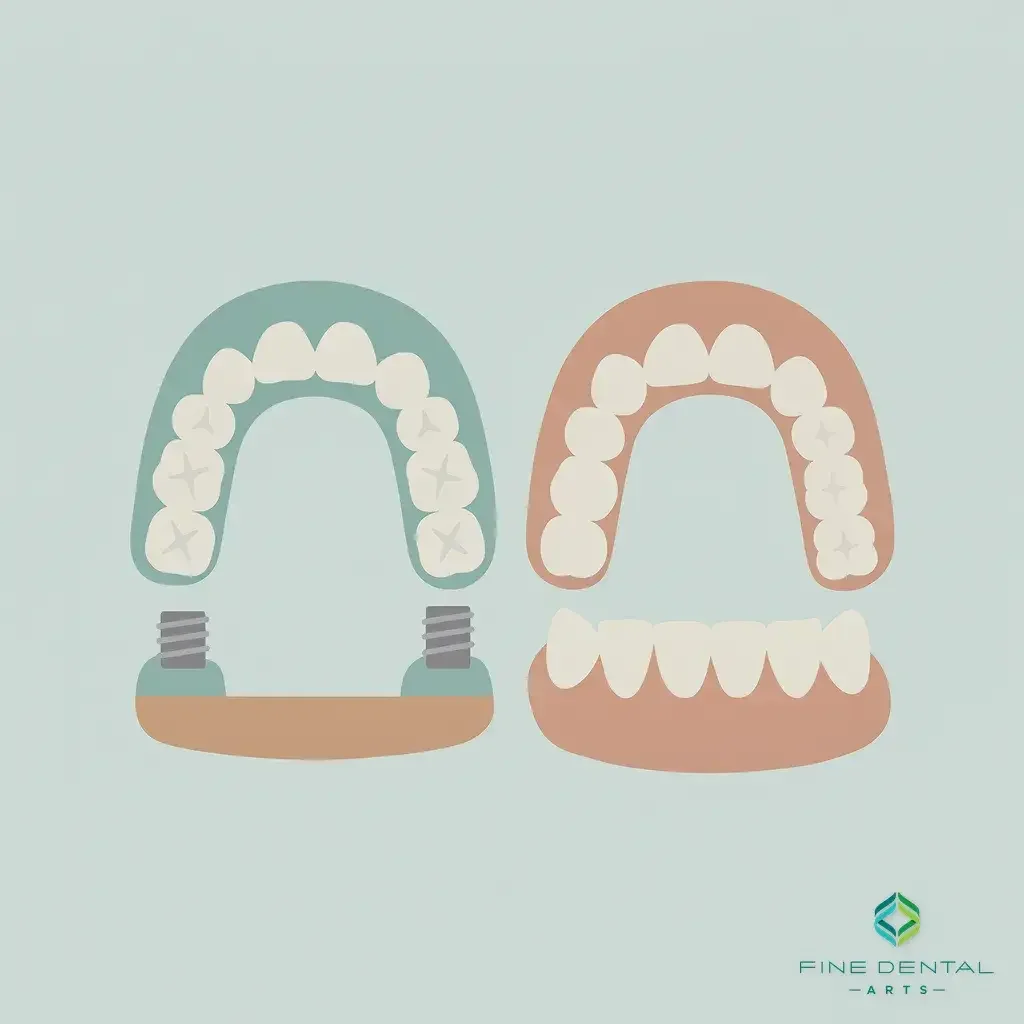
All-on-4 vs dentures comes down to anchorage. All-on-4 uses four dental implants to hold a full arch of replacement teeth securely in your jaw, while traditional dentures rest on your gums or attach loosely to natural suction. That structural difference shapes everything else: how the teeth feel, how they function, and how long they last.
Dental implants themselves are artificial tooth roots, typically made of titanium or zirconia. Surgeons place them directly into the jawbone, where they support crowns, bridges, or a full denture arch. Once integrated, this foundation gives your replacement teeth stability that removable dentures cannot match on their own.
Why does implant placement matter so much?
Placement location changes daily life. Implant-anchored teeth stay fixed. You avoid the shifting, clicking, or slipping that can happen with removable dentures during meals or conversation.
Here's a quick side-by-side view:
| Feature | All-on-4 | Traditional Dentures |
|---|---|---|
| Anchorage | Four implants per arch | Gum tissue/suction |
| Stability | Fixed in place | Can shift or loosen |
| Jawbone support | Ongoing stimulation | None |
Is All-on-4 right for someone who has struggled with loose dentures?
If your dentures slip, rub, or need frequent adjustment, an implant-supported option may serve you better long-term. At Fine Dental Arts, all-on-4 implants in Redmond are treated as the ultimate solution for missing teeth, with doctors guiding your case at every stage—from evaluation through final placement. That means Eastside patients in Kirkland. Bellevue have a nearby resource for weighing their treatment options carefully before committing to a full-arch solution.
How Do Traditional Dentures Compare on Stability?
Removable dentures rest on the gum ridge and shift during chewing, speaking, and even laughing. That movement creates a stability gap that many Redmond patients notice within months of wearing conventional plates. Tooth loss affects far more than appearance. Confidence, oral health, and daily quality of life all suffer when a denture slips at the wrong moment.
Full-arch implant solutions address that instability directly. For patients across Kirkland and Bellevue dealing with extensive tooth loss in one. Both arches, implant-anchored replacement restores chewing function and facial support in ways a floating denture cannot match. When comparing all-on-4 vs dentures, the difference comes down to anchorage: four strategically placed implants fuse with the jawbone. A traditional denture depends on suction and adhesive alone.
| Factor | Traditional Dentures | All-on-4 Implants |
|---|---|---|
| Anchorage | Gum ridge, suction/adhesive | Implants fused to jawbone |
| Chewing stability | Can shift with hard foods | Fixed, consistent bite force |
| Speech clarity | May slip during speech | Stays in place |
| Daily maintenance | Removal and soaking | Brush like natural teeth |
Do dentures ever feel as secure as implants?
Conventional dentures rarely match implant-level security, since they lack a fixed connection to bone. Implant-supported arches provide long-term stability that makes eating, speaking, and smiling noticeably more comfortable.
Fine Dental Arts evaluates your bone structure and denture history to recommend the right path forward. From dentures to full implant arches, care stays under one roof. Consistent brand identification you can count on at every stage of treatment.
What Happens During All-on-4 Placement and Recovery?
Four titanium posts anchor your entire new arch of teeth in a single surgical visit. Implant specialists position these posts strategically within your jawbone, using the density of existing bone to support a full set of replacement teeth without the extensive grafting many patients expect. For anyone comparing all-on-4 vs dentures, this surgical foundation is the defining difference: dentures rest on your gums. All-on-4 fuses directly to bone.
Your comfort during placement matters as much as the surgical technique itself. Fine Dental Arts relies on digital scanners, 3D imaging, and tissue lasers to map your jaw precisely before treatment begins. The Wand anesthetic delivery system numbs tissue gradually, so you avoid the pressure and sting of a traditional injection.
How long does All-on-4 recovery take?
Recovery unfolds in stages rather than overnight. You can expect initial healing and reduced swelling within the first one to two weeks, followed by continued bone integration over the following months. Your dentist directs each stage of this timeline, adjusting your plan as healing progresses.
Will you need a specialist for All-on-4?
Not always, but coordination matters when your case is complex. Fine Dental Arts doctors oversee your implant case from initial planning through final placement, keeping every phase connected. When bone loss, sinus proximity, or other complications arise, your doctor collaborates with trusted specialists to keep treatment coordinated and grounded in current clinical research.
What to expect immediately after surgery:
Mild swelling and tenderness for several days
A soft-food diet during early healing
Follow-up visits to monitor bone integration
Gradual return to normal chewing function
Which Costs Less Over Time: Implants or Dentures?
Long-term value depends less on the sticker price. More on how a treatment holds up over years of daily use. Full-arch implant solutions typically demand a larger upfront investment. Removable dentures cost less initially but often bring recurring expenses for adjustments, relines, and eventual replacement. Weighing all-on-4 vs dentures means looking beyond the first bill and considering what each option asks of you five or ten years down the road.
Your financial picture also depends on how treatment gets paid for, not just what it costs. You can offset either option through insurance coverage, since Fine Dental Arts accepts most traditional insurance plans. Flexible payment plans and CareCredit financing are also available, giving you room to budget for whichever path fits your mouth and your goals.
Do dentures need to be replaced more often than implants?
Yes. Removable dentures in Redmond typically require periodic relines and eventual full replacement as your jawbone and gum tissue change shape over time. Implant-supported options integrate with the jawbone itself, which reduces the shifting that drives repeat denture visits.
How do I know which option fits my budget long-term?
The answer starts with an honest evaluation of your oral health and goals, not just a quote. The practice has built new patient resources and clear first-visit expectations at its Redmond location to help you compare paths. Personalized treatment planning, backed by technology focused on accuracy and comfort, gives you a realistic picture of long-term value before you commit.
How Do I Decide Between All-on-4 and Dentures?
Your decision comes down to lifestyle, oral health goals, and how much stability you need from your new teeth. Weighing all-on-4 vs dentures without guidance risks months of trial and error, discomfort, or a restoration that doesn't match your daily habits. Dr. Kianoosh Behshid, DDS, FAGD, and Dr. Amir Emam, DDS, MS, guide Redmond patients through this exact decision, favoring honest, straightforward conversations over one-size-fits-all recommendations.
Start by asking yourself a few practical questions before your consultation.
What Should I Ask Myself Before Choosing?
Consider how removable dentures fit your daily routine versus a fixed full-arch solution. Think through these factors:
How much bone density remains in your jaw?
Do you want a permanent restoration or one you remove nightly?
How important is minimizing future adjustments or relines?
What does your budget and timeline allow for?
Where Can I Get Personalized Guidance?
You don't have to sort through these tradeoffs alone. Fine Dental Arts serves families and individuals throughout Redmond, along with neighboring Kirkland and Bellevue, across every age group facing tooth loss.
That means whether you're 55 or 85, the guidance you receive accounts for your specific bone structure, health history, and daily needs. A mid-week evening appointment slot also makes it easier to fit a consultation into a busy schedule. You're not forced to choose between your job and your smile.
FAQ
What is the main difference between All-on-4 and traditional dentures?
All-on-4 uses four implants fused to the jawbone for fixed, permanent support. Traditional dentures rest on the gum ridge using suction and adhesive, making them prone to shifting.
Why do traditional dentures feel less stable than All-on-4?
Traditional dentures shift during chewing, speaking, and laughing because they depend on gum ridge suction rather than a fused anchorage, creating a stability gap many Redmond patients notice within months.
Where can Eastside patients get guidance on choosing between these options?
Fine Dental Arts in Redmond, WA guides patients through evaluation and final placement, giving Kirkland and Bellevue patients a nearby resource for weighing All-on-4 against traditional dentures.
Conclusion
In closing, the choice between All-on-4 dental implants and traditional dentures reflects your priorities regarding comfort, functionality, and long-term oral health. All-on-4 implants offer superior stability, bone preservation, and a natural feel, while dentures provide a more accessible entry point for tooth replacement. At Fine Dental Arts, our doctors work with you to evaluate your anatomy, goals, and preferences, ensuring your treatment plan aligns with your lifestyle and delivers the confident smile you deserve.